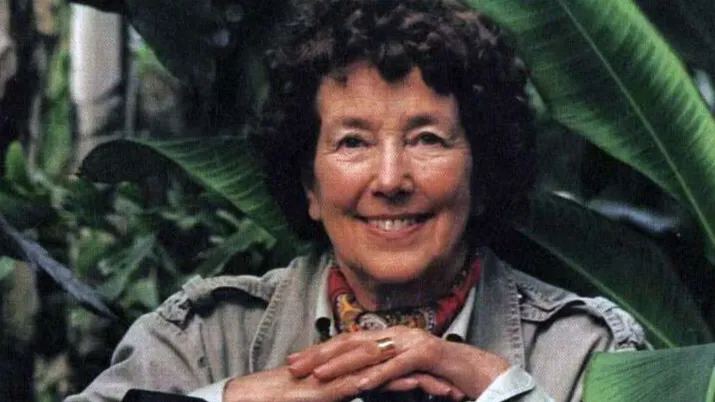
Astrid Bergman Suxdorff – A Forest, a Mountain, a Lion, a Child and a Heart
Chendru and Astrid: The Forgotten Bond
Kewal Krishna | Raipur: No one really knows why, but Chendru is once again in the limelight. Articles are being rewritten about him, documentaries are being made, and people are recalling how Chendru turned away from fame and quietly immersed himself in his native land. Ministers and leaders are retelling his stories, and once again, his admirers feel a deep sense of warmth and joy.
Ever since Chendru’s death, his memories have been celebrated from time to time, attempts made to keep them alive. Over the years, his memories have taken deep roots.
On January 17, 1999, a newspaper carried a feature titled “The Story of a Tarzan.” It was then that the wider public first came to know about Chendru. For the first time, people saw those striking photographs that told the true story of a young boy and his tiger friend. Those images left people spellbound. Even today, whenever they surface, they continue to captivate.
But while the photographs narrate Chendru’s enchanting story, they also carry within them the equally fascinating story of the woman behind the lens Astrid. People are often so immersed in the pictures that they forget the photographer altogether. Newspapers publish the images without giving credit, rarely bothering to ask who took them.
These photographs were first published in a 1960 picture book titled “Chendru – The Boy and the Tiger.” In India, however, the book came into public conversation only in 1999, when a newspaper feature reproduced them in color. Chendru, who walked away from fame, never parted from the book Astrid had gifted him. For decades, it lay preserved in his hut, tucked away in an old tin trunk, weathered but treasured.
Astrid was the wife of renowned filmmaker Arne Sucksdorff-his partner in dreams, creativity, thought, travel, and friendship. Together, they created the film that stormed the Cannes Festival and later the world-"The Jungle Saga”.
The film is also known by its English version, “The Flute and the Arrow.” Screened across the world in multiple languages, it mesmerized audiences with Bastar’s natural beauty and tribal culture. Astrid was both co-producer and photographer for the film. It showed the world how beautiful life becomes when humans and wildlife coexist.
Astrid loved forests, wildlife, and children wherever they might be in the world. The Jungle Saga was a reflection of that love, and “Chendru – The Boy and the Tiger” was her colorful album of affection. When her photographs were not enough to convey her emotions, she picked up her pen and wrote: “In the faraway forests of central India…”
Astrid Maria Elisabeth Bergman Sucksdorff was not just a skilled photographer but also a writer. Born in Stockholm in 1927, she was the daughter of noted biologist and researcher Sten Bergman, whose influence instilled in her a lifelong passion for nature, animals, and travel. Trained under photographer Arne Wahlberg, she mastered techniques of airbrushing, commercial photography, and color printing before embarking on nearly fifty adventurous journeys across the world as a photojournalist.
Astrid’s first marriage was to photographer Sven Gillsäter, with whom she had a daughter, Pia. Later, she partnered with filmmaker Arne Sucksdorff, sharing both life and creative projects, and they had a son, Jens. In her later years, she lived with her third husband, Gösta Vogel-Rödén, dedicating herself to writing, photography, and hunting.
Archival records note her participation in the landmark 1949 exhibition Unga Fotografer (“Young Photographers”) in Stockholm, which gave a new identity to Sweden’s emerging photographers. In a field dominated by men, Astrid stood out as one of the few women to challenge convention. Critics hailed the exhibition as the dawn of a new era in Swedish photography.
Her first book, Mickie Rävungen (1953), told the story of a young fox cub through photographs. After her work in Bastar, she published Chendru får en tiger (1959), which became internationally popular and was translated into several languages. She went on to co-create documentaries and children’s projects with Arne, gaining global recognition for documenting nature, wildlife, and indigenous life.
The Sucksdorffs did not come to Bastar with the intention of filmmaking. They had only wanted to witness the beauty described by scholars like Verrier Elwin. But Abujhmad, Chendru, and the warmth of tribal life inspired them into creating what became history The Jungle Saga and Chendru – The Boy and the Tiger. These were works born from their hearts. Astrid’s maternal warmth allowed her to connect deeply with Chendru and the tribal communities, blending film, book, and Bastar into a seamless whole.
Her projects extended far beyond India to the Arctic, Sweden, and across continents. Her work on wildlife and migratory birds culminated in her 1973 book Tiger in Sight.
Technically, Astrid’s photography was remarkable: she captured the stark contrasts of Arctic light and shadow with the same mastery that she applied in the tropical forests of central India no small feat in the 1950s.
Until 1999, Chendru had remained forgotten. But Astrid she never really disappeared. Though mentioned occasionally, few have looked closely into her life, her heart, where there was a forest, a mountain, a tiger, and a boy.
In his book Bastar Tiger: Chendru (2020), Narayanpur-based writer Shiv Kumar Pandey records eyewitness accounts from Gadhbengal villagers who had seen The Jungle Saga being filmed. Through their memories, Astrid’s working style comes alive: she insisted the dancers wear their own clothes, without special costumes, and spent time playing with Chendru and a leopard cub while Arne immersed himself in studies.
Later it became clear that the film included not just Chendru’s tiger friend, Tumbu, but also another tiger, a leopard cub, and possibly other animals brought from Kolkata. Chendru’s bond with Tumbu was genuine, as was his affection with the cub. And Astrid, too, shared that bond with equal tenderness.
After the film’s release, Astrid and Arne even took Chendru to Sweden, where he lived with them for nearly a year. The film was shown in multiple languages worldwide, and Chendru became a sensation. Photographs show Astrid showering Chendru with as much maternal affection as she did on her own daughters.
After World War II, Astrid had turned her focus to photographic picture books for children a new genre at the time introducing them to nature and cultures around the world. Alongside Anna Riwkin-Brick, she became one of the most prominent names in this field. Over her lifetime, she published 20 books and, in 1984, received the Astrid Lindgren Prize for her contributions to children’s literature.
In 1997, she published her autobiography Med livet i fokus (With Life in Focus). She spent her final years in Skara, passing away in 2015. Her creative archives are preserved today at the Landskrona Museum in Sweden.
In India, however, these stories surfaced slowly, piecemeal. Chendru’s tale often remained incomplete, in part because Astrid’s writings and her autobiography remained untranslated from Swedish. Only with the arrival of the internet did scattered information begin to be compiled.
It is said Astrid even wished to adopt Chendru. But around the same time, her marriage with Arne began to falter. Not letting Chendru bear the brunt of their discord, they decided to send him back to Gadhbengal, to his own environment. Arne personally brought him back to India, and it was then that Chendru famously met Prime Minister Jawaharlal Nehru.
Yet the very return meant to protect him from turmoil perhaps sealed his fate. Back in his village, Chendru grew withdrawn. He never spoke of his sorrow whether it was from parting with his beloved tiger and leopard cub, or from losing Astrid’s maternal touch, no one knows.
The writer is an independent journalist who, in 1999, was the first to bring Chendru’s forgotten story back to light.