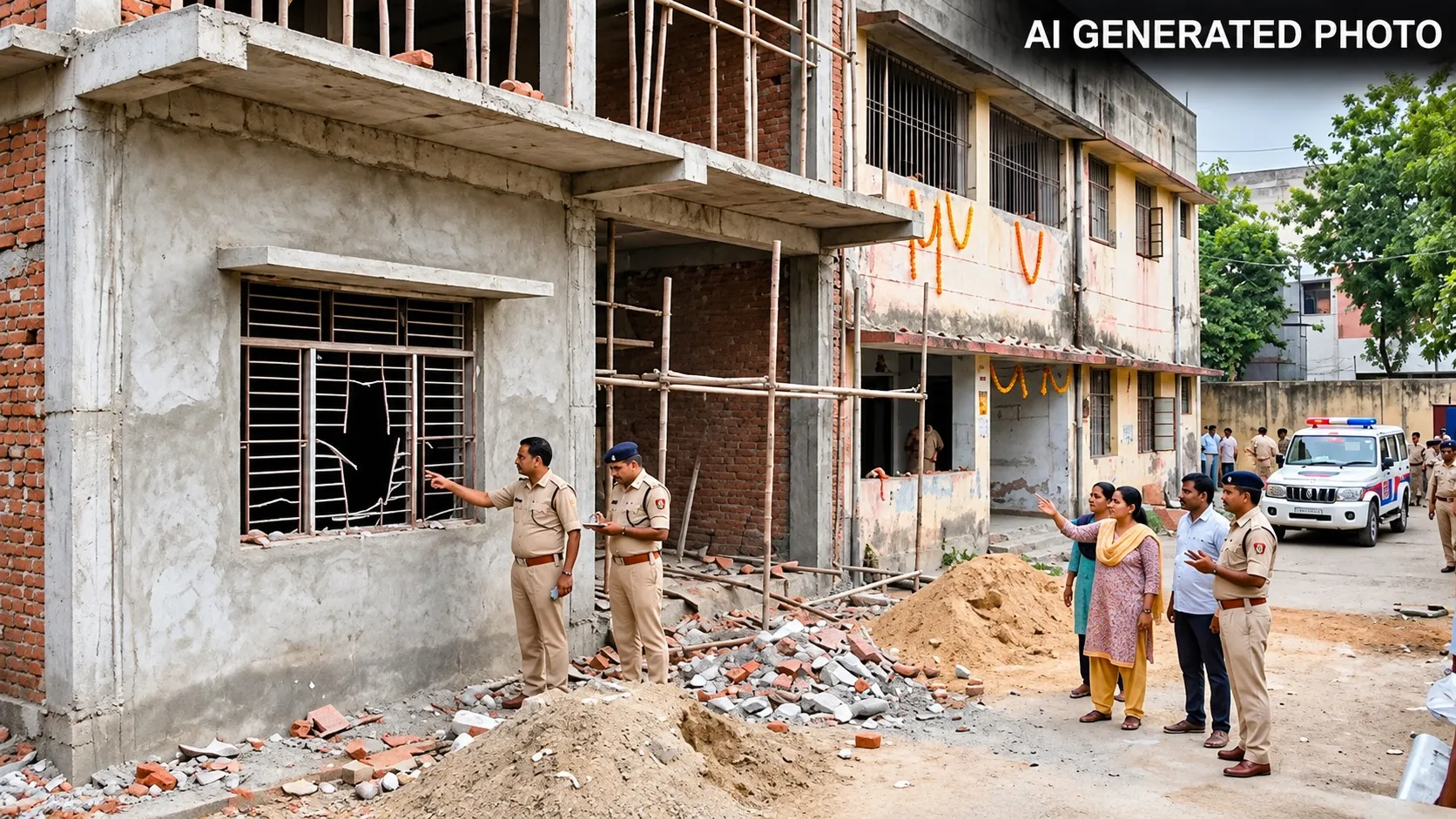
HC quashes SIT probe into Maoist Ramachandra Reddy's encounter
Chhattisgarh HC dismisses ‘Fake Encounter’ petition
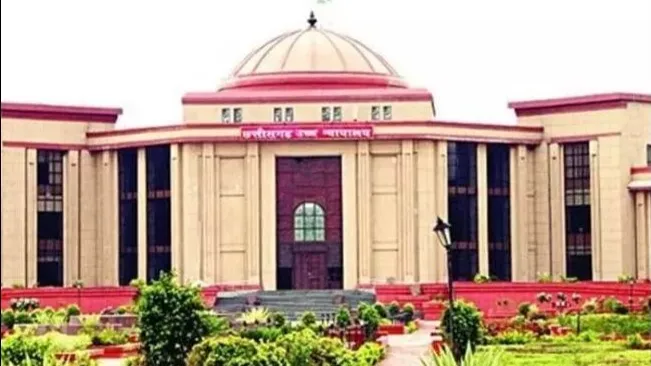
Bilaspur | Coreepondent: The Chhattisgarh High Court has dismissed a petition seeking the formation of a Special Investigation Team (SIT) to probe the death of Maoist leader Katha Ramachandra Reddy on October 14, 2025, which the petitioner had described as a "fake encounter."
Background of the Case
The petition was filed by Raja Chandra, son of the deceased Katha Ramachandra Reddy (alias Vikalp, Raju Dada, and other names), under Article 226 of the Indian Constitution. The petitioner claimed that his father and a family friend, Kadri Satyanarayana Reddy (@Kosa Dada), were killed in a fake encounter by the police on September 22, 2025.
The petitioner's main objection was that the alleged encounter involved gunfire between hundreds of Maoists and security forces, but only two high-ranking Maoist members were killed, while there were no casualties or injuries among the security forces.
Additionally, the petitioner questioned the timing of the encounter, as it occurred two days after a press release allegedly issued by the deceased, refuting previous reports of the Maoists' surrender. The petition argued that the deceased were "captured alive by the police with the help of their own party members, tortured, and later killed."
Petitioner's Allegations
Senior advocate Colin Gonsalves, representing the petitioner, argued that the deceased's mother observed injuries on the body that were inconsistent with an encounter. He alleged that the body did not show bullet wounds, but rather, missing eyelid skin, burned and peeling skin on the chest, injury marks on the abdomen, and "injuries caused by sharp-edged weapons on other parts of the body."
Gonsalves also claimed that the authorities did not follow the mandatory guidelines laid down by the Supreme Court in the People's Union for Civil Liberties v. State of Maharashtra case.
He insisted that the videography of the one-and-a-half-hour post-mortem was only ten minutes long.
State Arguments
Advocate General Prafulla N. Bharat, representing the state, described the encounter as genuine. He submitted that, following specific intelligence input, a police team engaged 20-25 Naxalites in the Abujhmad area. Following the encounter, an AK-47 rifle, an INSAS rifle, and other weapons were recovered along with the bodies of two Maoists.
The state claimed that all procedural guidelines established by the Supreme Court and the National Human Rights Commission (NHRC) were followed. This included immediately informing the NHRC, conducting an investigation in the presence of an executive magistrate, conducting a videotaped post-mortem, and initiating a magisterial inquiry.
The state cited the SFSL (State Forensic Science Laboratory) report, which confirmed that the seized weapons were in working condition and had been fired recently. Furthermore, "firing discharge residue" was found on the deceased's hands. The state also stated that the deceased had an extensive criminal history, with 29 cases registered in Chhattisgarh, 6 in Maharashtra, and 2 in Telangana. Regarding the puncture wounds on his body, the state argued that such injuries were possible in the "difficult terrain" of the dense forest.
Court's Analysis and Decision
The High Court found that the petitioner's allegations were not substantiated by any material evidence. The court stated that "encounters in Naxal-affected areas are military-style counter-insurgency operations. It is not uncommon for some deaths or lopsided casualties to occur due to surprise or superior tactical position. Therefore, the absence of police casualties cannot, in itself, indicate falsity."
The court also noted that the deceased had not been in contact with his family since 2007 and had a significant criminal record. Citing Supreme Court decisions, the High Court reiterated that handing over the investigation to an independent agency is an "extraordinary power" that should be exercised "rarely, cautiously, and in exceptional circumstances."
The court stated that the petitioner and his mother's claim that the deceased was arrested, tortured, and then murdered, giving the appearance of an encounter, rests solely on conjecture and suspicion. The petitioner lacked concrete facts/evidence to establish that the incident was a fake encounter. The court reiterated that a special investigation or other extreme measures cannot be approved based solely on suspicion without concrete evidence.
The court examined the state's response in detail and noted that the police had followed all the procedures required after the encounter, including informing the NHRC, providing a medical team for the post-mortem, FSL/Forensic procedures, videography/photography of the post-mortem, and conducting an inquest by a magistrate. The court stated that these documents and procedures were on record and did not provide compelling evidence to support the petitioner's allegations.
The petitioner raised the issue of the post-mortem being videographed for only 10 minutes and the absence of photographs. The court also judicially examined the claim that the state had obtained and placed on record the post-mortem, videography, and FSL/ballistic reports, and that the SFSL report also contained evidence of the weapon being activated/fired and the hand-swab (nitrate/firing residue) results. The court noted that the available reports
Sick evidence is either presented for investigation or claimed to exist on record, so merely citing a brief videography is not sufficient to label the entire incident as fabricated.
The Court, citing Supreme Court judgments (such as State of West Bengal v. CPDR and the Arnab Goswami case), underlined that removing the SIT/CBI from a routine police investigation and transferring it is an extraordinary and carefully exercised power. Such transfers are not made merely on the basis of illogical or unsubstantiated allegations; they require clear, strong, and convincing grounds that would compromise or jeopardize the local investigation. The Court found that such exceptional circumstances were not established in this case.
Ultimately, the Court concluded that no exceptional circumstances existed to justify such interference and dismissed the petition.